This Week in Washington
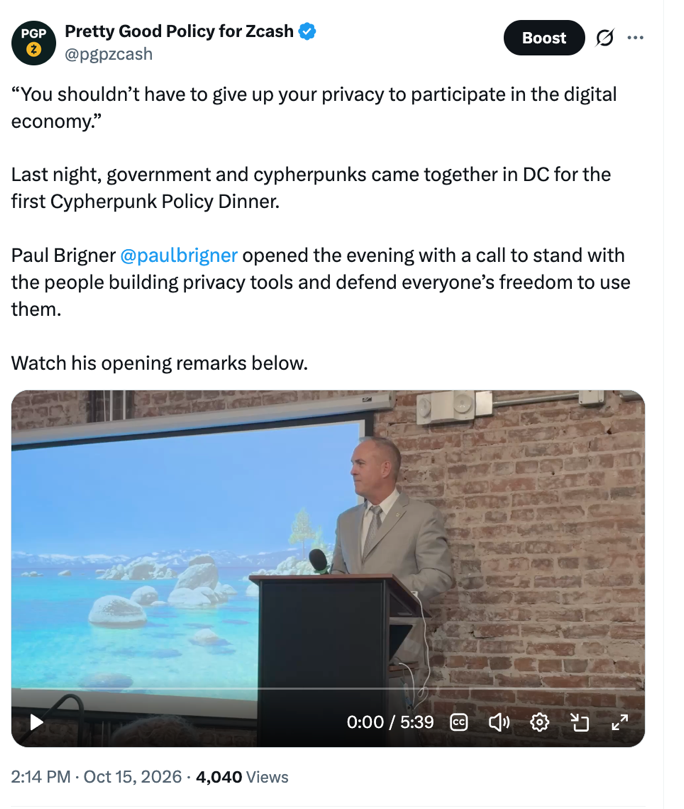
On October 14, PGPZ and Project Glitch convened the inaugural Cypherpunk Policy Dinner in Washington, bringing privacy advocates together with the people building private financial tools. ZODL Chief Policy and Regulatory Officer and PGPZ Chairman Paul Brigner opened with a call to defend privacy and the freedom to build and use those tools. The program featured remarks by former Securities and Exchange Commissioner (SEC) Hester Peirce; SEC Counsel to the Chairman and Senior Advisor for the Crypto Task Force Landon Zinda; and ZODL CEO Josh Swihart, followed by a fireside conversation between Landon and Josh moderated by DCG Chief Policy Officer and PGPZ Board Member Julie Stitzel.
The third annual DC Privacy Summit followed on October 15. Its program addressed financial privacy, digital identity, AI and cryptography, including how to limit unnecessary data exposure as digital systems become more capable. Together, the events provided a forum for connecting the technical design of privacy tools with the policy choices that govern their use.
X Post of the Week
BIS Research Demonstrates Privacy by Design in Digital Cash
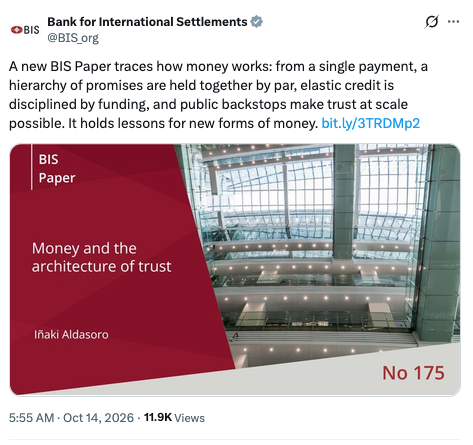
The Bank for International Settlements published its second-phase Project Aurum report, examining a digital cash prototype that combines zero-knowledge proofs and other privacy-preserving technologies with regulated bank onboarding and defined compliance functions. The project tests whether payment validity can be verified while limiting disclosure of identity and transaction information. BIS presents it as an experimental design, with further work needed before production deployment. Note that it does not announce a CBDC launch or impose regulatory requirements.
The Bank found that separating data among participants can reduce the consequences of a compromise, but a breach at a customer’s bank can still expose that bank’s customer information. The technical protections also depend on assumptions about the components being compromised.
Why it matters for Zcash
The research gives Zcash stakeholders a concrete institutional reference for explaining that verification need not require routine disclosure of everyone’s payment history. It supports discussion of zero-knowledge proofs, selective disclosure, and the cybersecurity value of data minimization.
Action Item
No action item at this time.
Relevant Post
Democrats Face a Contest for Financial Services Committee Leadership
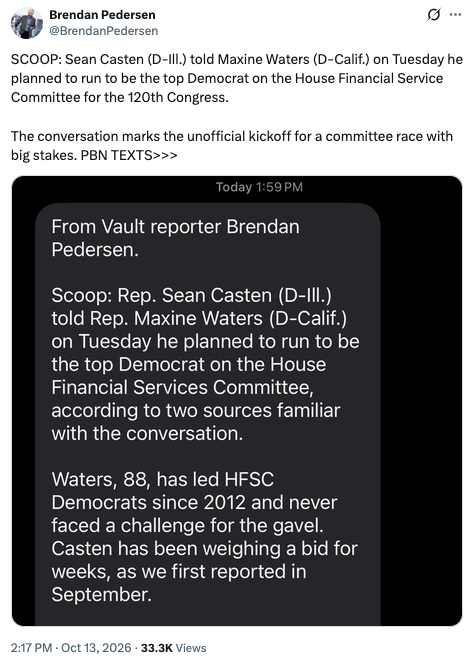
Rep. Sean Casten’s (D-IL) effort to replace Rep. Maxine Waters (D-CA) as the top Democrat on the House Financial Services Committee is developing into a contested succession debate. Reporting on the race describes a dispute over seniority, experience and generational change. Semafor reported that Democratic leadership was taking a hands-off approach and that Rep. Bill Foster (D-CA) was also considering a bid. The outcome remains unsettled; committee leadership would be determined through the Democratic caucus process after the elections.
The result could affect the committee’s legislative agenda, oversight and negotiating priorities in the next Congress. If Democrats win the House, their selected leader could chair the panel; otherwise, the position would remain the leading Democratic voice on the committee. This is a prospective leadership contest and does not itself change current law or demonstrate new agreement on digital-asset legislation.
Why it matters for Zcash
Rep. Casten has been a prominent critic of illicit-finance risks in digital assets. His record includes the 2024 Blockchain Integrity Act proposal restricting financial institutions’ dealings with funds routed through mixers and the 2025 CODE Act proposal for developing AML, sanctions and identity controls for DeFi.
Note that both Rep. Waters and Casten have jointly challenged SEC crypto-enforcement rollbacks, so a personnel change would not necessarily represent a broad reversal of the committee Democrats’ approach.
Action Item
No action item at this time.
Relevant Post
White House Crypto Policy Vacancy Adds Coordination Uncertainty
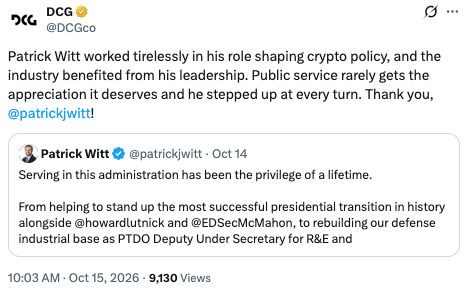
Patrick Witt confirmed his departure as Executive Director of the White House President’s Council of Advisors on Digital Assets, without leaving a publicly named successor for the administration’s dedicated digital assets policy office. A White House official told the publication that digital assets and the CLARITY Act remain presidential priorities. Existing SEC, CFTC and Treasury work continues under those agencies’ respective authorities.
The immediate implication is uncertainty about responsibility for interagency coordination and congressional negotiations. A vacancy may complicate efforts to broker remaining compromises during the post-election legislative period, although it does not establish that the administration has abandoned market structure legislation. Passage still depends on congressional agreement, and agency initiatives continue to face their own statutory and procedural limits.
Why it matters for Zcash
Continuity of technical and policy engagement matters as personnel change. Financial privacy, data minimization, and protections for noncustodial developers may receive limited attention if discussion concentrates on exchange access, capital formation, and stablecoins.
The vacancy creates no immediate change to ZEC’s legal treatment or to the obligations of users and developers. Its practical significance will depend on whether a successor is appointed, the authority assigned to that role, and the priorities of any renewed legislative negotiations.
Action Item
No action item at this time.
Relevant Post