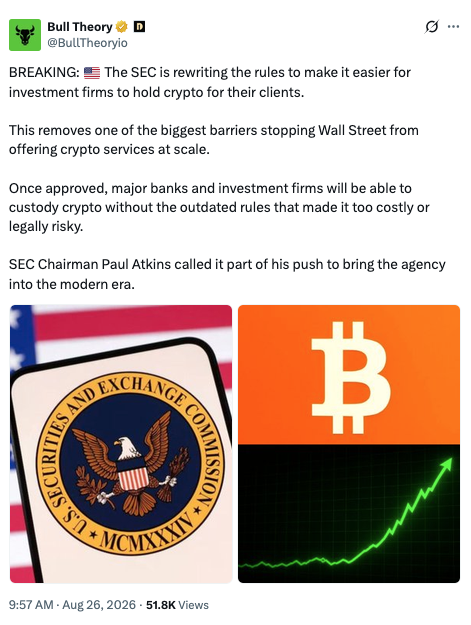
X Post of the Week
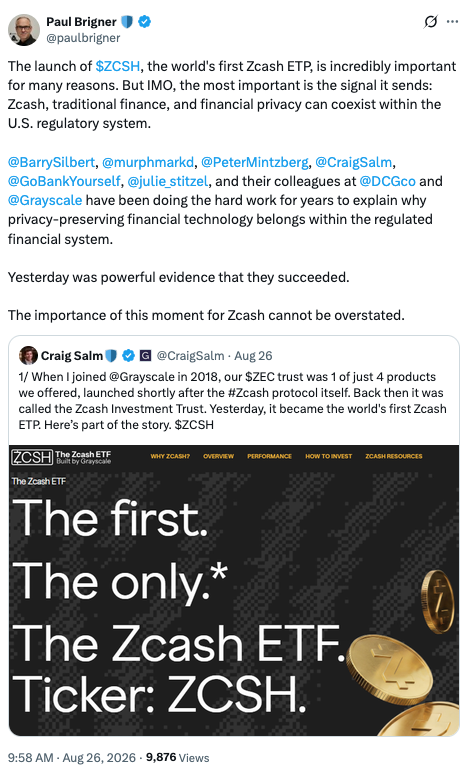
Industry Groups Challenge Illinois Digital-Asset Tax
The Blockchain Association and Crypto Council for Innovation filed a pre-enforcement lawsuit challenging Illinois’s Digital Asset Tax Act, which is scheduled to take effect January 1, 2027. The law imposes a tax equal to 0.2% of the value of a digital asset when an Illinois customer receives an exchange, transfer, or storage service through a covered digital-asset broker. Brokers must collect and remit the tax and comply with registration and recordkeeping requirements. Thecomplaint argues that the law discriminates against electronic commerce in violation of the federal Internet Tax Freedom Act, improperly burdens interstate commerce, is unconstitutionally vague, violates Illinois tax-uniformity and delegation requirements, and was enacted through procedures inconsistent with the Illinois Constitution. The lawsuit follows a separate July challenge brought by The Digital Chamber. The litigation does not itself suspend the law, and no court has yet resolved the plaintiffs’ allegations. Still, the parallel lawsuits increase the likelihood that the statute’s validity and enforceability will receive judicial consideration before its effective date. Implementation therefore remains uncertain, although affected businesses must continue preparing unless a court issues an injunction or the state amends or repeals the law.
Why this matters for Zcash
This law affects Zcash users in Illinois who use centralized platforms like Coinbase, Kraken, and Gemini, as the platforms will be required to log every purchase, trade, or withdrawal of crypto, including Zcash, and tack on the 0.2% tax, including transfers from a custodial wallet to a noncustodial wallet.
The law may impact users who use a noncustodial wallet’s internal swap functions, which rely on decentralized backend partners. While peer-to-peer transactions via noncustodial wallets would not be subject to the tax, the external liquidity providers, DeFi frontends, and market makers that execute the cross-chain swaps would likely be operating for-profit businesses because they collect fees. If these underlying protocols clear $100,000 in gross receipts from crypto trades originating in Illinois, the state will consider them "brokers." This may result in companies blocking Illinois residents or limiting available features via geofencing.
Action Item
- If you are in Illinois, call your local state representative and senator, framing the law’s implementation as a consumer privacy and data security issue. Explain that the law forces platforms to aggressively log and track the financial data of everyday citizens to prove whether they reside in Illinois, creating a massive honeypot for hackers. Push for a legislative amendment to clearly exempt noncustodial software and peer-to-peer transfers entirely.
- Monitor the case for any request for preliminary injunctive relief, the State of Illinois’ response, and clarification regarding the precise transactions and service providers covered by the tax.
Relevant Post

Stand With Crypto Endorses Bipartisan Group of Congressional Incumbents
Stand With Crypto announced its support for 32 House incumbents in the 2026 midterm elections, with additional House and Senate endorsements expected before the general election. The bipartisan list includes congressional leaders and members of the Agriculture, Financial Services, and Ways and Means Committees, which are likely to retain jurisdiction over digital-asset market structure, taxation, and related legislation. If a substantial number of endorsed candidates prevail, the result could improve the prospects for crypto-related legislation in the next Congress.
Why this matters for Zcash
A larger bipartisan group of lawmakers familiar with digital assets could provide a more receptive environment for policies affecting the Zcash ecosystem, exchanges, self-custody, and open-source development.
Note that general support for the industry should not be presumed to include support for financial privacy or shielded transactions, although the inclusion of members positioned to influence financial-services, agriculture, and tax policy creates opportunities for targeted education concerning zero-knowledge proofs, viewing keys, and selective disclosure.
Action Item
No action item.
Relevant post
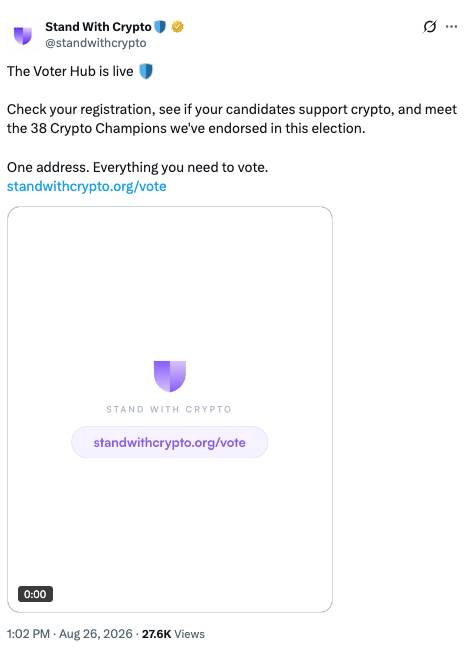
SEC Reopens Investment Adviser and Fund Crypto-Custody Rulemaking
The Securities and Exchange Commission (SEC) has submitted a new custody-rule initiative to the White House Office of Information and Regulatory Affairs for review, which sets up the SEC to introduce the rulemaking in October. The initiative would modernize custody requirements applicable to investment advisers and investment companies, clarify how those requirements apply to crypto assets, and remove burdens associated with provisions the SEC considers outdated.
Why this matters for Zcash
The rulemaking‘s principal significance is institutional, but the final framework could determine how registered advisers and investment funds can hold ZEC for clients, which entities may serve as qualified custodians, and what technical safeguards those custodians must maintain.
Action Item
Please let us know if you have any feedback on the concept. We will share a summary of the notice of proposed rulemaking once it becomes available.
Relevant Post