X Post of the Week
Senate Won’t Vote on Crypto Clarity Act Before Its Summer Break
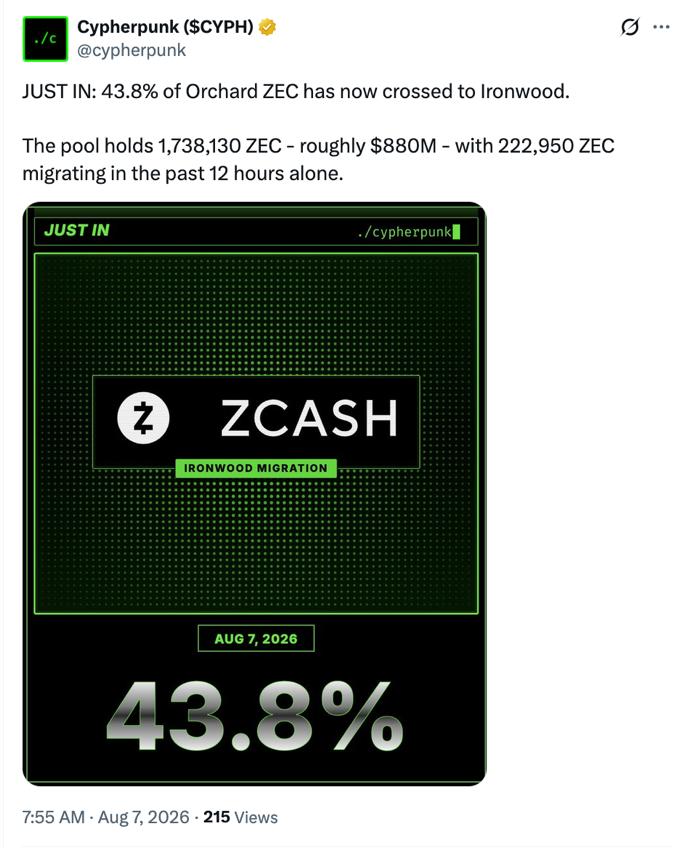
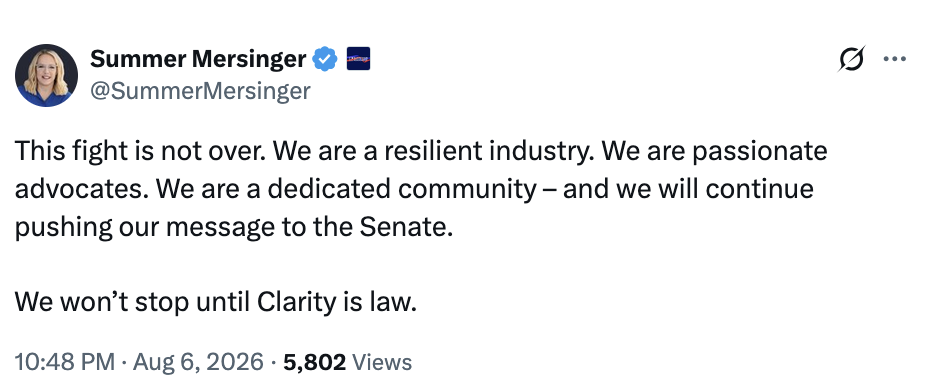
Senate Majority Leader John Thune (R-SD) confirmed the Senate will not vote on the Digital Asset Market Clarity (CLARITY) Act before August recess, ending efforts to begin floor consideration before lawmakers leave Washington. The Senate is scheduled to return September 14, leaving roughly three weeks of legislative activity before the chamber becomes increasingly focused on the November midterm elections. The delay reflects both unresolved bipartisan disagreements over the legislation and competition from other Senate priorities, including government funding and nominations. Sen. Thune has indicated that the CLARITY Act will be taken up when the Senate returns, so the bill remains viable. However, losing the August window significantly reduces the probability of enactment in 2026 as the Senate must still needs 60 votes to invoke cloture on the bill, and, if it passes, the House and Senate will need to resolve differences between the two versions of the legislation.
Why this matters for Zcash
Delaying consideration until September means Zcash ecosystem stakeholders should expect the existing regulatory framework to remain operative for longer. It also makes the remaining negotiations particularly important given that provisions concerning illicit finance, decentralized technology and developer liability have greater direct relevance to Zcash than the stablecoin-rewards dispute that has received much of the political attention so far this year.
Action Item
Call your senators’ offices to advocate for the passage of the CLARITY Act with developer protections preserved and join the PGPZ Coalition Market Structure Working Group.
Relevant Post
Crypto’s Campaign Efforts See Rare Loss, but Crypto Roster in Congress Likely to Grow
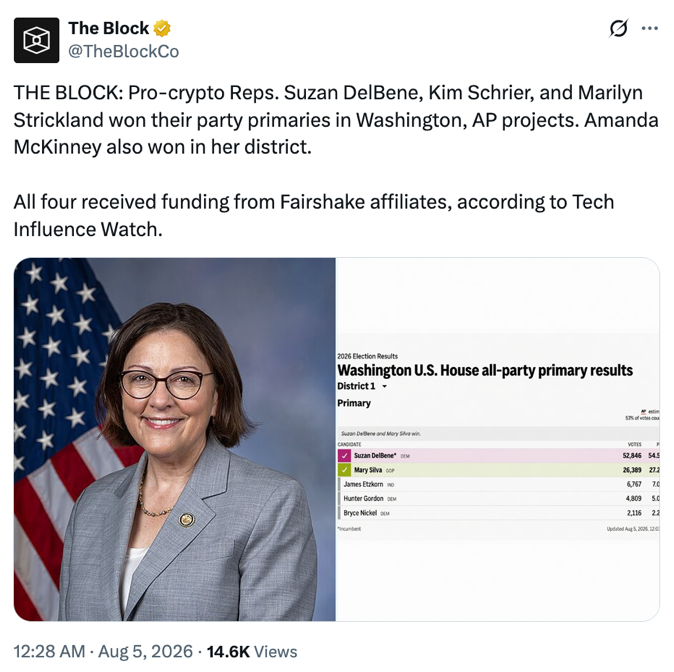
The digital asset industry’s Fairshake PAC suffered an uncommon electoral setback when Rep. Shri Thanedar (D-MI), a CLARITY Act co-sponsor, lost his Democratic primary despite more than $2 million in industry-supported spending. The result was offset by victories for five other Fairshake-backed candidates in Michigan and Washington, including lawmakers who have supported digital asset legislation. The broader pattern remains favorable to the industry’s effort to increase the number of lawmakers receptive to digital asset policy, although the result regarding Rep. Thanedar’s race demonstrates that campaign spending does not necessarily determine electoral outcomes. With the CLARITY Act now delayed and other issues, such as digital asset taxation, remaining before Congress, the composition of the next Congress is becoming increasingly relevant to the durability of federal digital asset public policy.
Why this matters for Zcash
- A larger congressional bloc receptive to digital assets could improve the long-term environment for federal digital asset legislation, particularly if the CLARITY Act is not enacted before the current Congress expires. For the Zcash ecosystem, however, a generally “pro-crypto” Congress should not automatically be regarded as supportive of financial privacy. Zcash-specific policy priorities, including protection for non-custodial software development, lawful use of shielded transactions, appropriate AML treatment and recognition of privacy-preserving technology, will require separate education and engagement. Consequently, the election results suggest a potentially more receptive policymaking environment, but one in which the Zcash ecosystem will still need to distinguish privacy technology from custodial financial intermediaries and illicit finance concerns.
Action Item
No action item at this time.
Relevant Post