
X Post of the Week
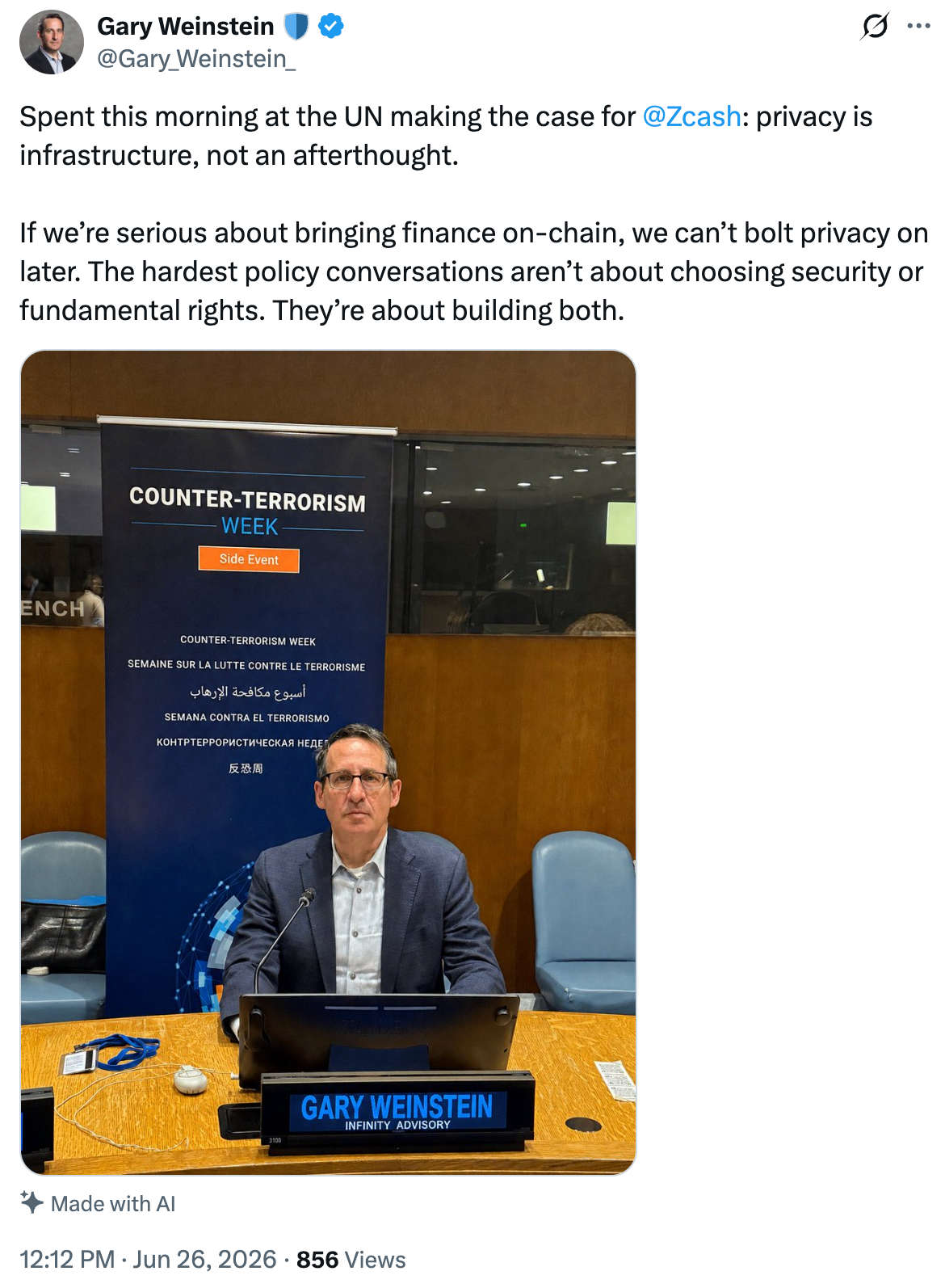
Bipartisan Housing Legislation Heading to President’s Desk Includes Statutory Retail CBDC Ban Through 2030
The U.S. Senate voted 85–5 to pass H.R.6644, the 21st Century ROAD to Housing Act, a comprehensive housing affordability package, which includes a critical bicameral compromise that bars the Federal Reserve from engineering or issuing a retail Central Bank Digital Currency (CBDC) until at least 2030. The statutory ban reflects deep skepticism towards a Fed-issued CBDC, although administrative windows remain open for wholesale settlement tokenization experiments.
The signing ceremony was initially scheduled for Thursday, June 25, but President Trump postponed it, conditioning the signature on Congress passing H.R. 8281, the Safeguard American Voter Eligibility (SAVE) Act, voter ID legislation. On Monday, June 29, the House Speaker Mike Johnson (R-LA) will send the bill to the White House for signature, with the SAVE Act still working through the Senate. The president will have 10 days (excluding Sundays) to sign the bill or veto it; typically, if the president does not act, the bill would automatically become law. However, since the 10-day window starts Monday and would end on July 10, occurring while the Senate is out of session from June 29-July 10, the bill can fail via pocket veto.
Why this matters for Zcash
This statutory restriction against CBDC protects digital assets used for payments against a state-monopolized financial infrastructure. By establishing a clear legislative boundary that prevents the federal government from competing with private-sector transactional rails, Congress preserves room for U.S. digital asset payments innovation. A retail CBDC, which would inevitably crowd out alternative forms of payments, would also present privacy risks to users as efforts increase to enable government agencies to engage in financial surveillance. If the bill is not enacted, the CBDC ban will not become effective.
Action Items
No action needed.
Relevant Posts
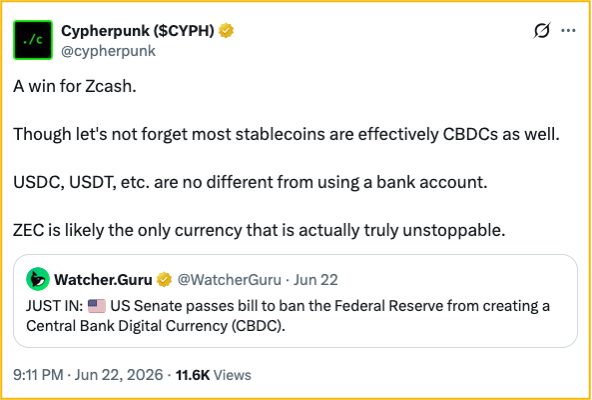
Digital Asset Coalitions Urge Unaltered Passage of H.R. 9175 to Normalize Mining and Staking Tax Deferral
The Blockchain Association, Crypto Council for Innovation, and the Digital Chamber have called on the House Ways and Means Committee, which oversees tax legislation, to pass H.R. 9175, Tax Clarity for Mining and Staking Act, as introduced. The draft legislation structures the tax treatment of block rewards, providing that mining and staking rewards must only face taxation when assets are sold rather than being assessed as ordinary income immediately upon receipt.
Why this matters for Zcash
This legislation levels the playing field for block rewards with respect to taxation, preventing them from being taxed twice—when the reward is received and again when the asset is sold. Currently, a Zcash mining operation must continually account for and liquidate portions of block rewards to satisfy immediate ordinary income tax obligations upon generation, creating extensive cash-flow complications. Shifting the taxable event to realization dramatically reduces operational costs for distributed infrastructure providers in the United States and makes it easier to use for payments Zcash block rewards that miners earn.
Action item
Show support for this legislation by liking and reposting content on social media. If you are a constituent of a Congressperson who is on the Ways and Means Committee, call their office and tell them you support H.R. 9175 in its current form.
Relevant Posts
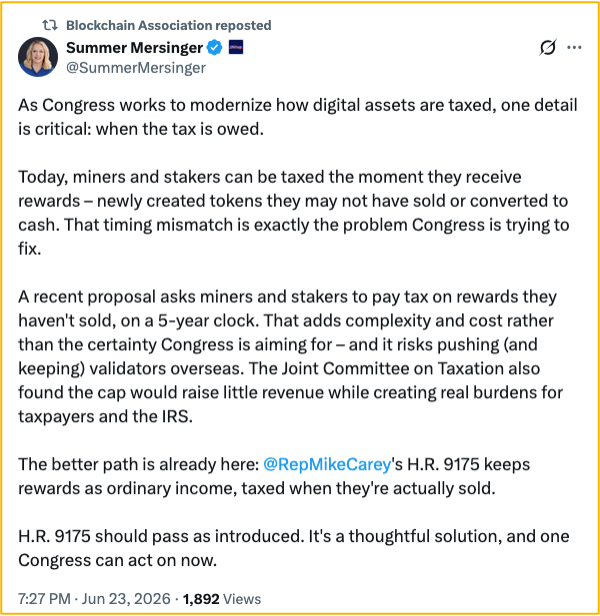
Texas Directs Regulators to Enforce Upfront Grid Infrastructure Funding Requirements on Data Centers
Texas Governor Greg Abbott issued an executive directive to the Public Utility Commission and ERCOT, which manages the flow of electric power to ~90% of the state’s electric load, to finalize a joint regulatory memorandum by July 17, mandating that massive computing facilities and digital asset miners fully fund their upfront electric transmission hookup infrastructure. The action seeks to shift grid infrastructure expansion costs away from residential ratepayers, creating a major test case for how distributed mining node operators can utilize their unique load flexibility to protect their underlying network access parameters.
Why this matters for Zcash
This policy takes a 180-degree turn from Texas’ previous position that encouraged data centers to build/relocate to Texas through cheap land, minimal regulatory friction, and tax incentives.
Action Items
If you are a Zcash miner in Texas, reach out with any feedback on how this will impact your operations.
Relevant Posts
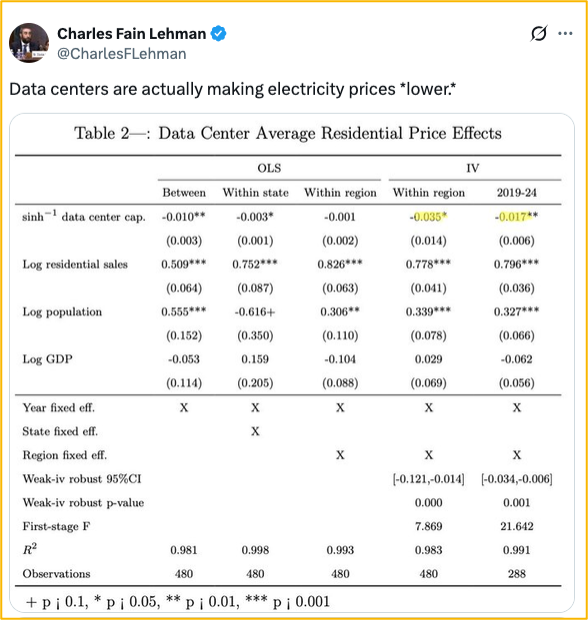
House Financial Services Committee Field Hearing Investigates How the CLARITY Act Unlocks Financial Innovation
The House Financial Services Committee announced it will hold a hearing on July 17, entitled "Building the Future of Finance: How the CLARITY Act Unlocks Innovation."
Why this matters for Zcash
One of the key issues remaining as the Senate looks to finalize the CLARITY Act is around developer protections that are included in the Blockchain Regulatory Certainty Act, which provides that non-custodial developers are not money transmitters. This hearing is an opportunity to advocate for preserving the developer protections that are in the legislation. If the legislation passes in the Senate, it will need to head back to the House for another vote to reconcile the changes.
Action Items
Repost/share content on social media that promotes preserving the developer protections in the CLARITY Act. If you are a constituent of a Congressperson who is on the House Financial Services Committee, call their office and tell them you support the Blockchain Regulatory Certainty Act.
House Financial Services Committee Evaluates Anti-Money Laundering Frameworks in FinCEN Oversight Hearing
The House Financial Services Committee will conduct a full committee oversight hearing on July 21, entitled "Oversight of the Financial Crimes Enforcement Network." Andrea Gacki, Director of FinCEN, will testify as the sole witness.
Why this matters for Zcash
This hearing is an opportunity for Congress to question the head of FinCEN on current priorities as they relate to digital assets, how FinCEN is thinking about applying the Bank Secrecy Act (BSA) and AML/KYC requirements to stablecoins (which would impact a stablecoin issued as a ZSA), and other topics.
Action Items
No action needed at this time.